The Housing Gap
America faces a shortfall of 3–4 million homes.
Conventional multifamily delivery operates within structural constraints that resist acceleration. Design processes are sequential. Cost compounds through fragmented coordination. Environmental impact is embedded in the system, not addressed by it.
Incremental change within the existing model has limits. The delivery structure itself needs to change.
The Fast2Frame System
A standardized 7–8 story, Type IV-C mass timber building. Hybrid 40% off-site / 60% conventional construction. Non-proprietary, commercially available components. Sequenced for early enclosure.
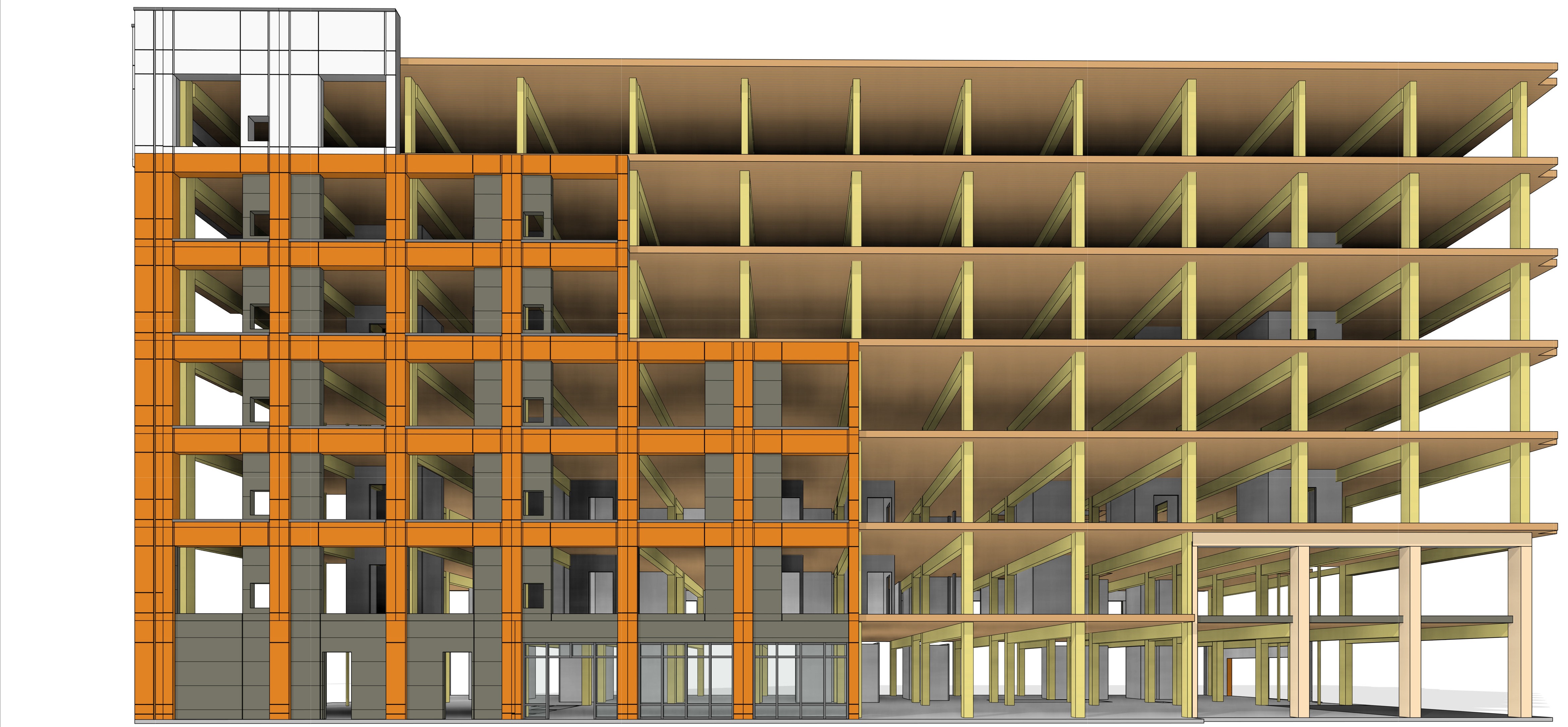
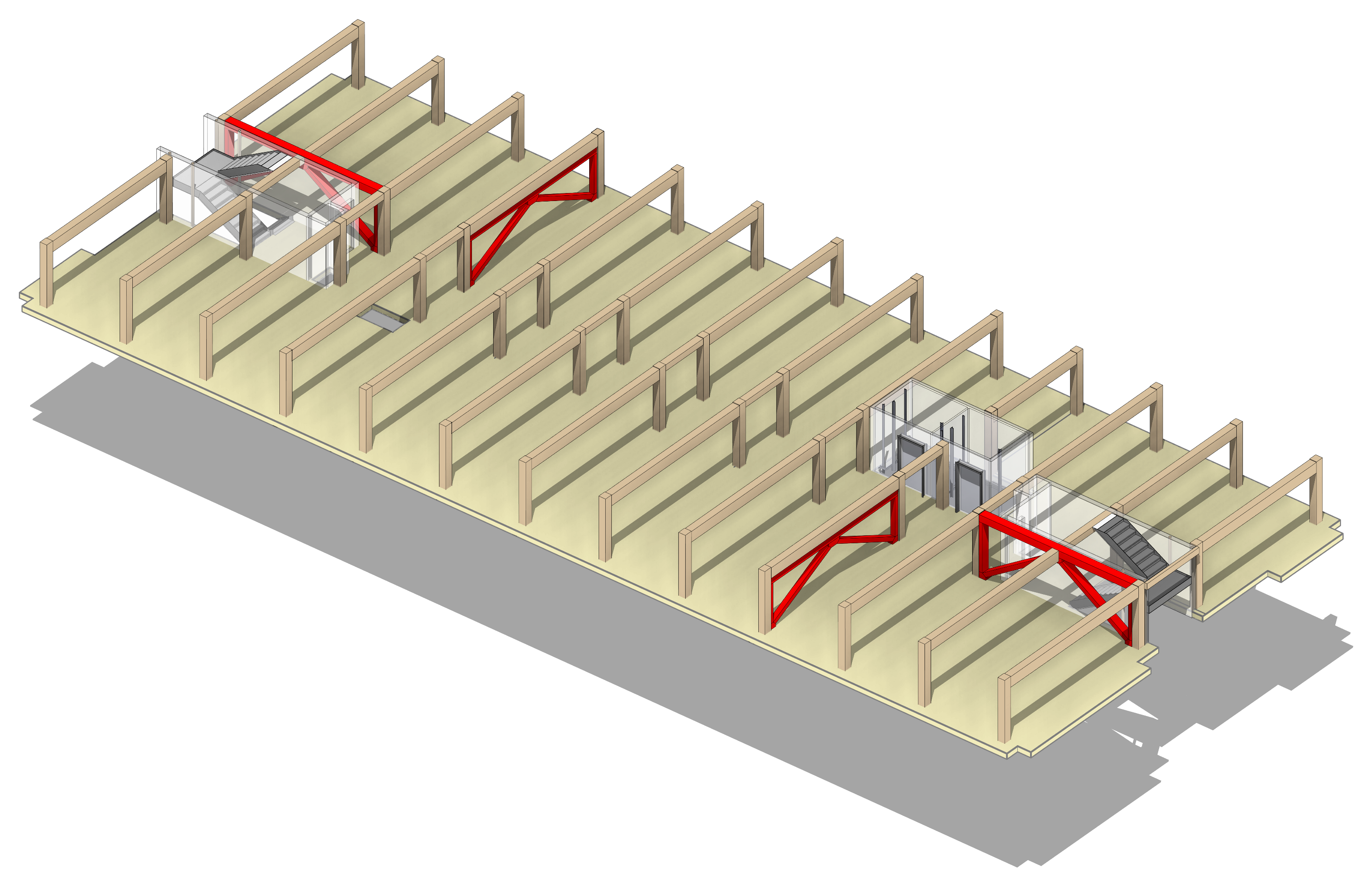
- Post and beam logic
- Integrated lateral steel system
- Repeated frame across floors
- Conventional and approvable
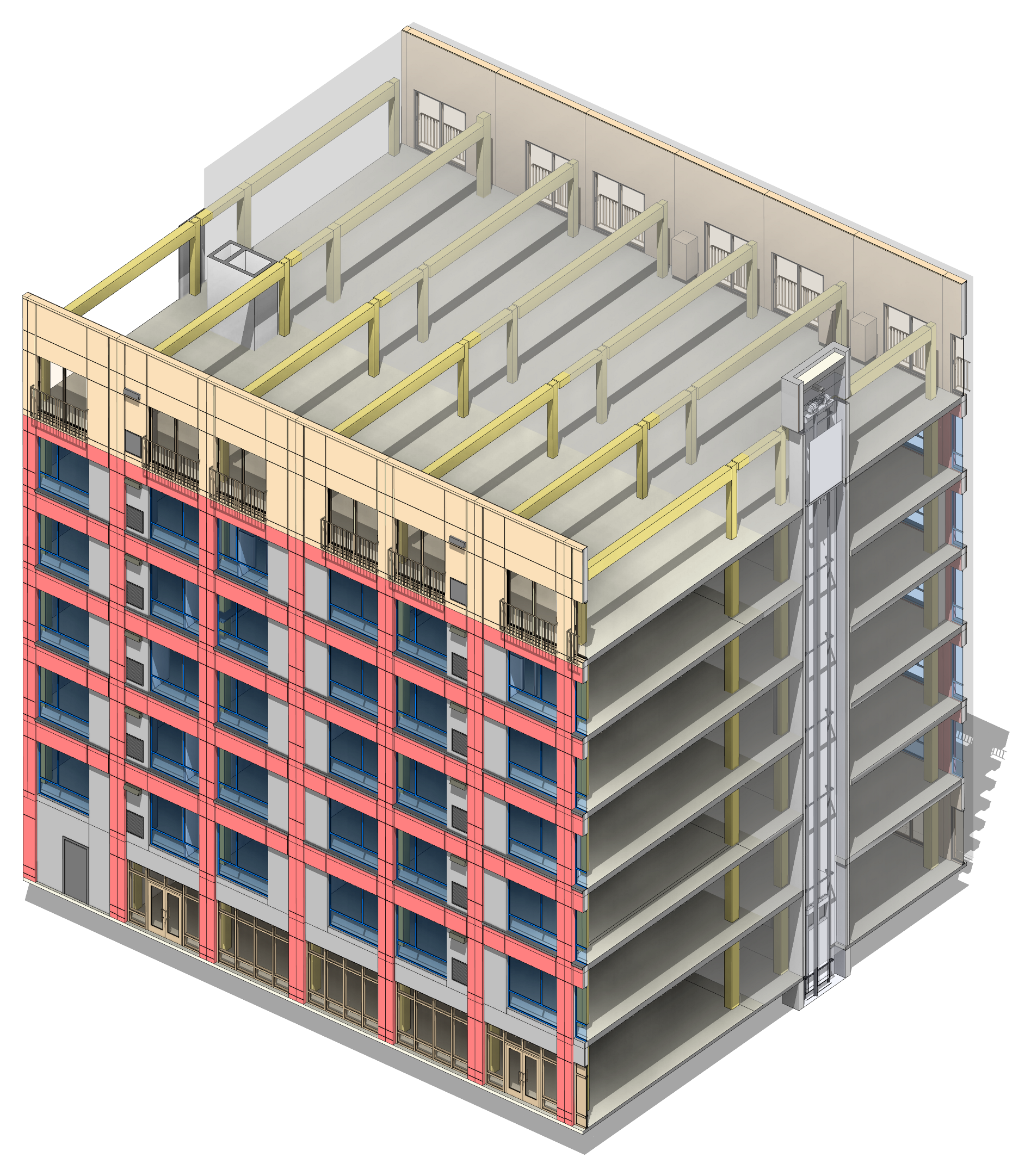
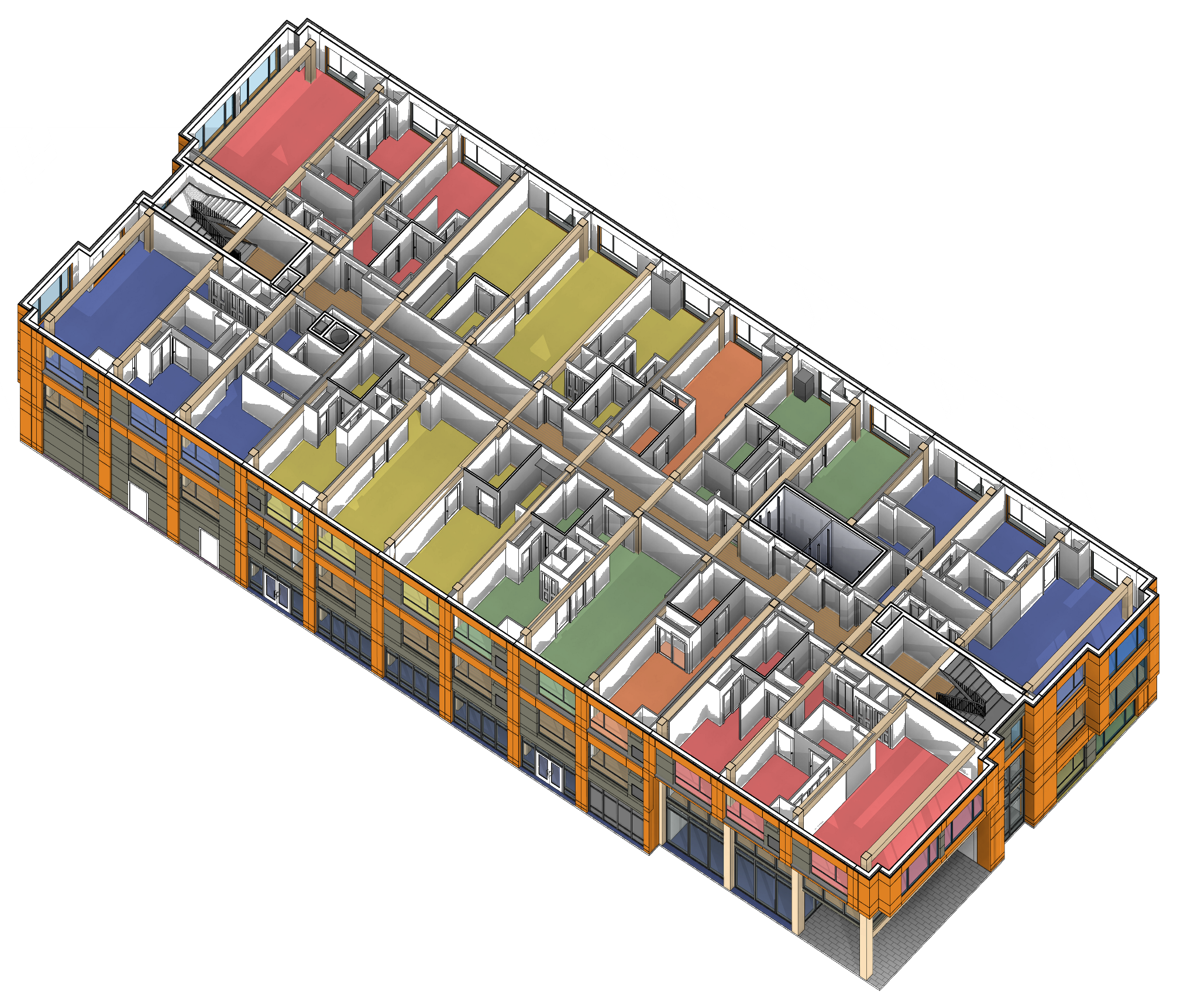
- Three wall panel types
- Rapid enclosure sequencing
- Non-proprietary components
- Manufactured off-site
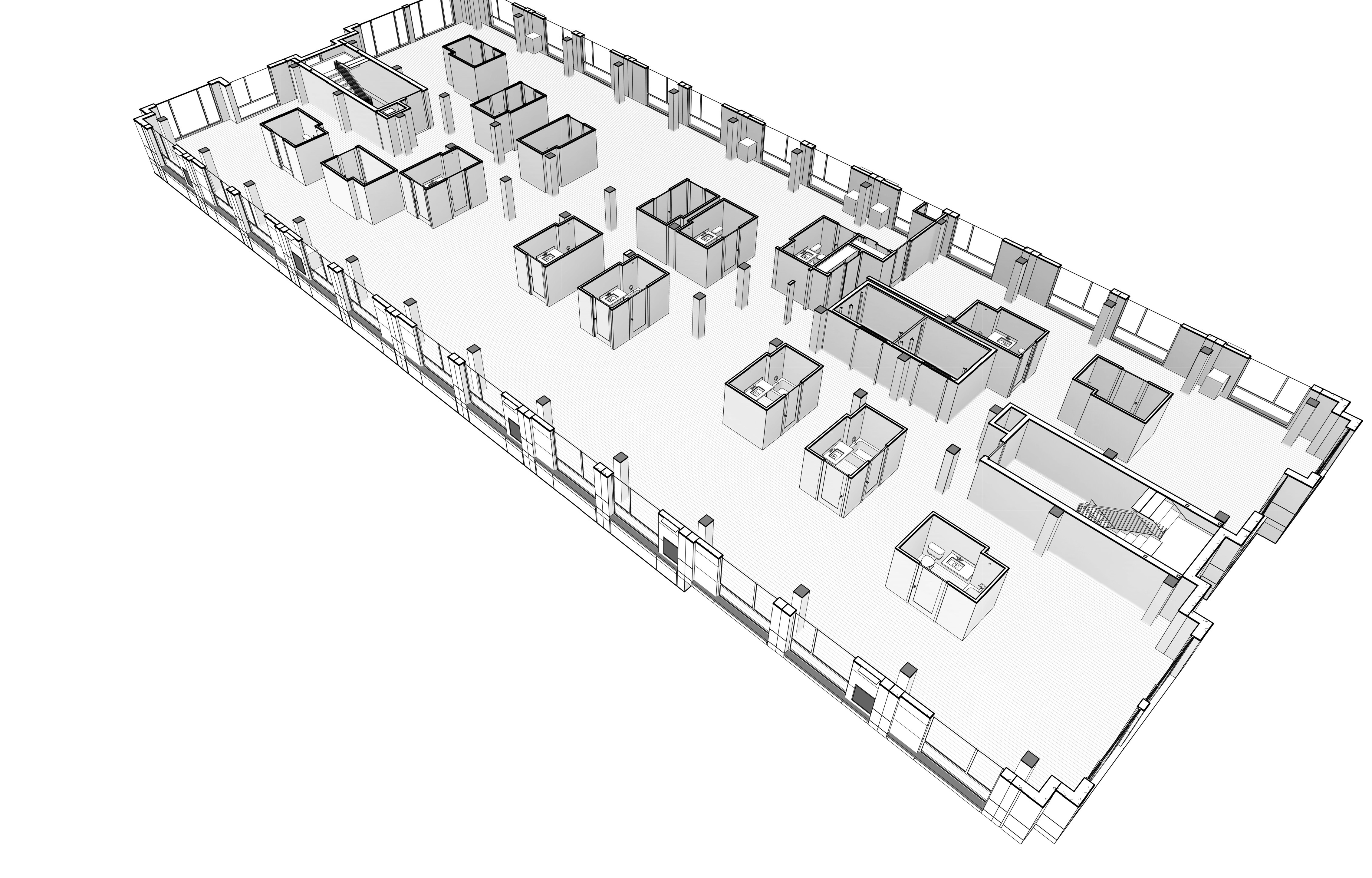
- ANSI-compliant prefabricated bathroom pods
- Trade coordination and independence by design
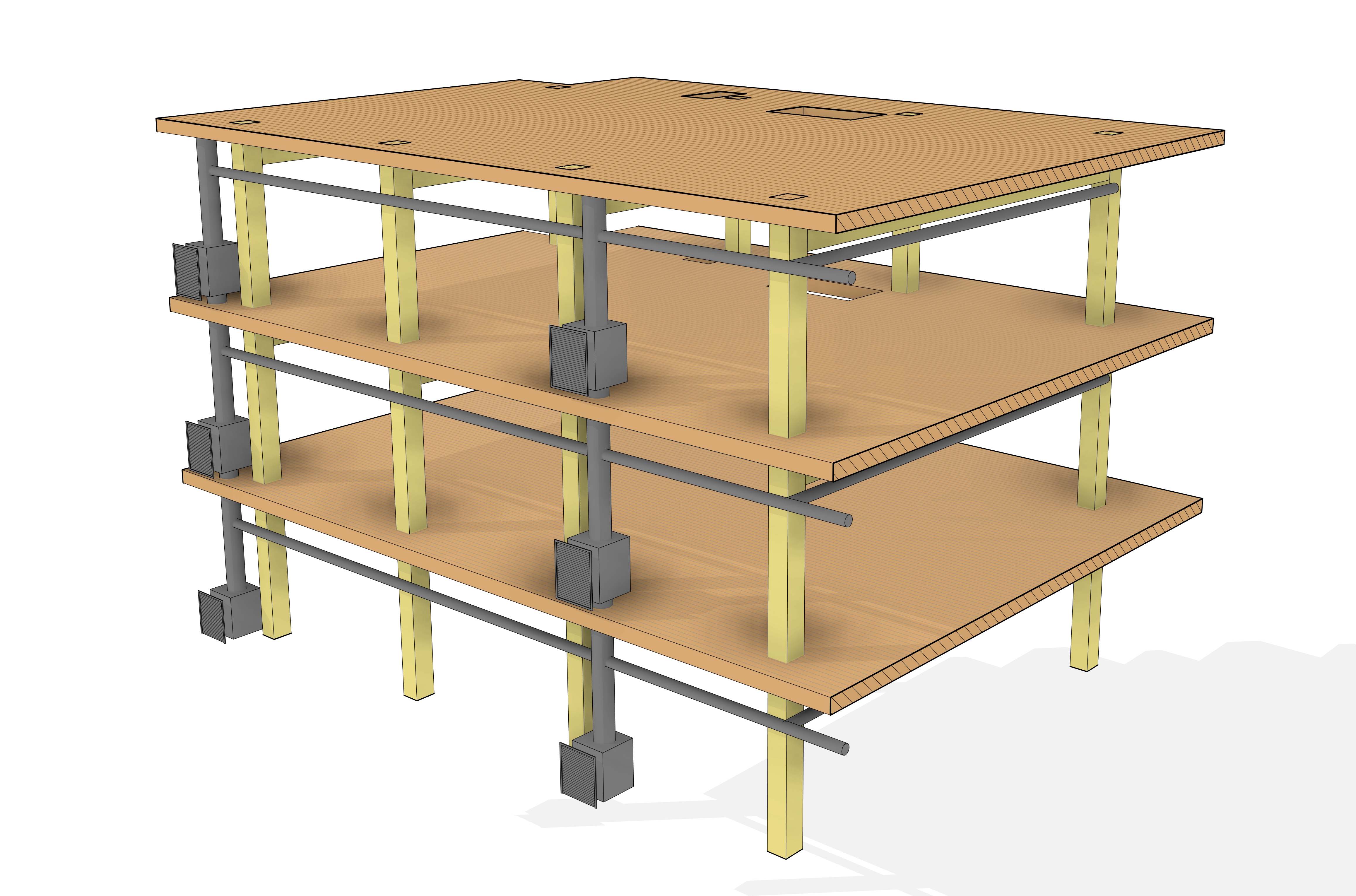
- Integrated exterior duct strategy
- Prefabricated risers reduce on-site MEP coordination
- Accessible from building exterior for maintenance
Selection and Logistics
The building and site are co-designed. Construction logistics are integrated into the permanent site plan, not treated as temporary conditions.
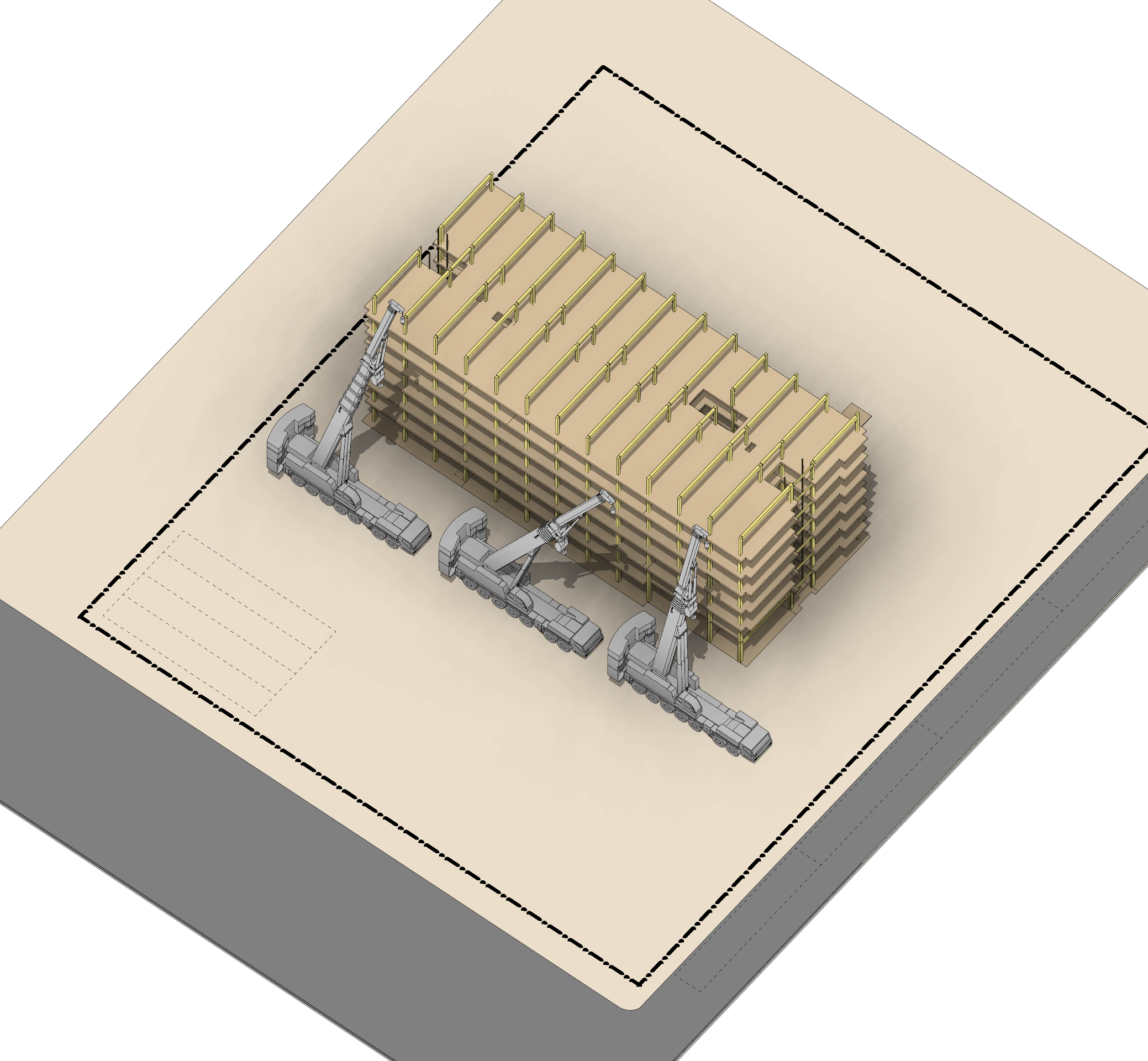
- 1–1.5 acre urban infill target
- Building multiples and parametric design for larger sites
- Standardized four-sided site access plan
- Predefined crane reach logic and dedicated laydown zones
- Construction margins incorporated into permanent site plan
- Site feasibility screening tool
Choice Within a Standard Structure
Standardization defines the structural and logistical framework. Within that framework, the system accommodates variation where it matters to developers and their markets.
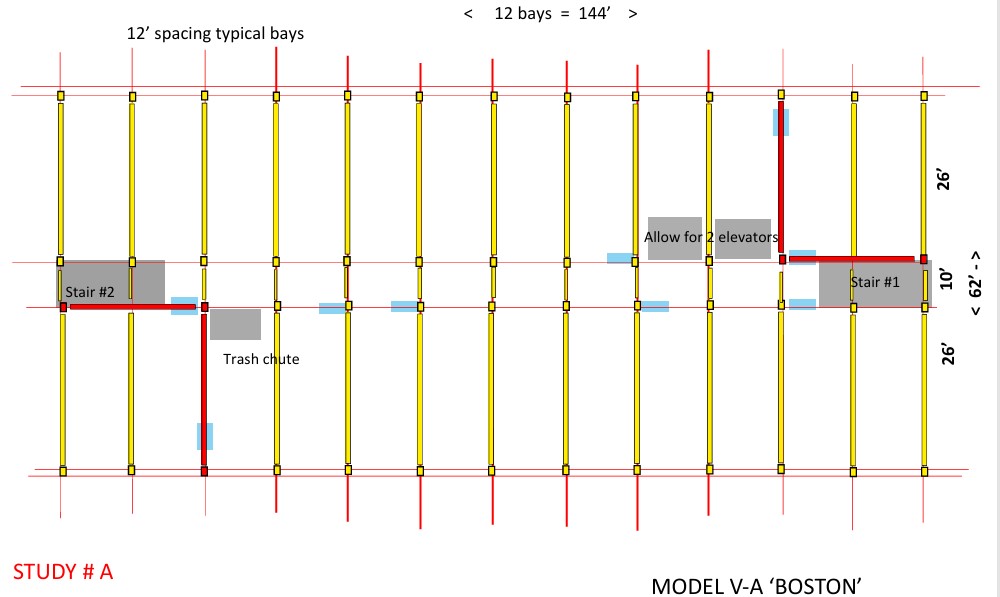
- Multiple floor plate configurations (V-70 variants)
- Facade panel options
- Loggias and landscape-driven perception
- Site orientation flexibility (flip/rotate ground floor)
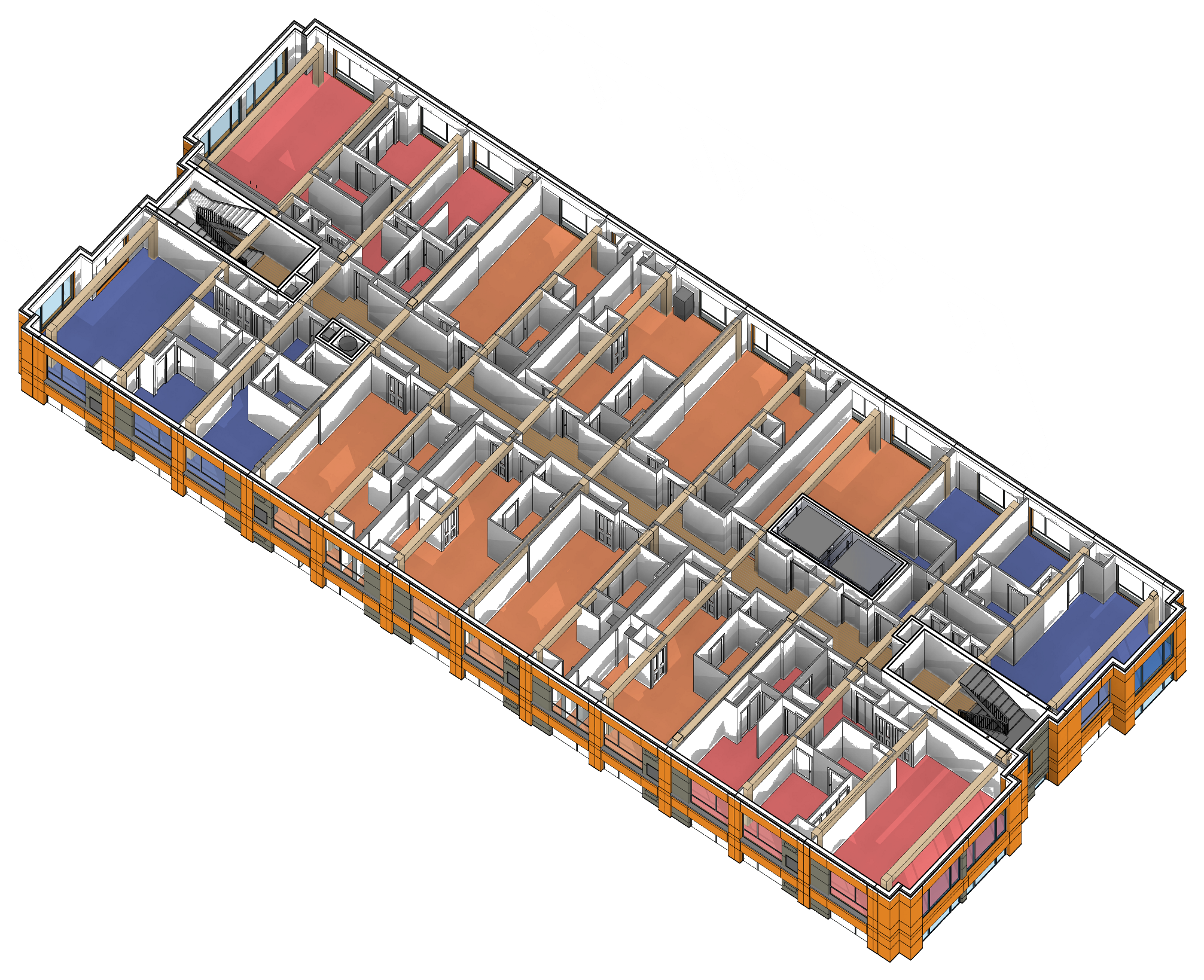
- Adaptable unit mixes without structural change
- 1BR and 2BR configurations within the same post and beam grid
- Workforce housing loft variants available
Procedures, Pro Forma, and Schedule
The system includes the business infrastructure required to evaluate, finance, and execute a project. These are working tools, not summaries.
- Integrated pro forma templates
- Pre-manufactured component pricing inputs
- 40% / 60% procurement structure
- Pre-finance component strategy
- Three standard schedules: feasibility, procurement, post-enclosure
- Contract frameworks and templates
Progress and Readiness
A multi-year, founder-funded effort. Developed by a small team across architecture, engineering, and construction. The work has moved from broad exploration to detailed execution.
- Multi-year model refinement with real pricing inputs
- Increasing off-site percentage as the model matures
- Defined path to deployment
- Built around tangible work products, not concepts
Frequently Asked
Modular construction typically ships finished volumetric units to site. Fast2Frame is a hybrid system: 40% off-site manufactured components integrated into a 60% conventional on-site build. The structural frame is mass timber erected on site. The system standardizes coordination across these methods rather than replacing conventional construction entirely.
The building uses non-proprietary, commercially available components. The value is in the integration: how components are specified, sequenced, and coordinated. The frame, panels, pods, and ductwork are sourced from existing supply chains.
Type IV-C per the International Building Code. A conventional mass timber classification with defined fire resistance and structural requirements. Approvable under existing code frameworks.
1–1.5 acre urban infill parcels with four-sided access. Building multiples and parametric design for larger sites. A site feasibility screening tool is available for early evaluation against system requirements including crane reach, laydown, and construction margins.
The construction sequence prioritizes closing the building envelope. This reduces weather exposure for interior trades, tightens the schedule, and compresses the interest carry period during construction.
The 40% off-site components follow a pre-finance procurement strategy—orders placed and funded ahead of site mobilization. The 60% conventional scope follows standard construction draw schedules. The pro forma templates account for this split.